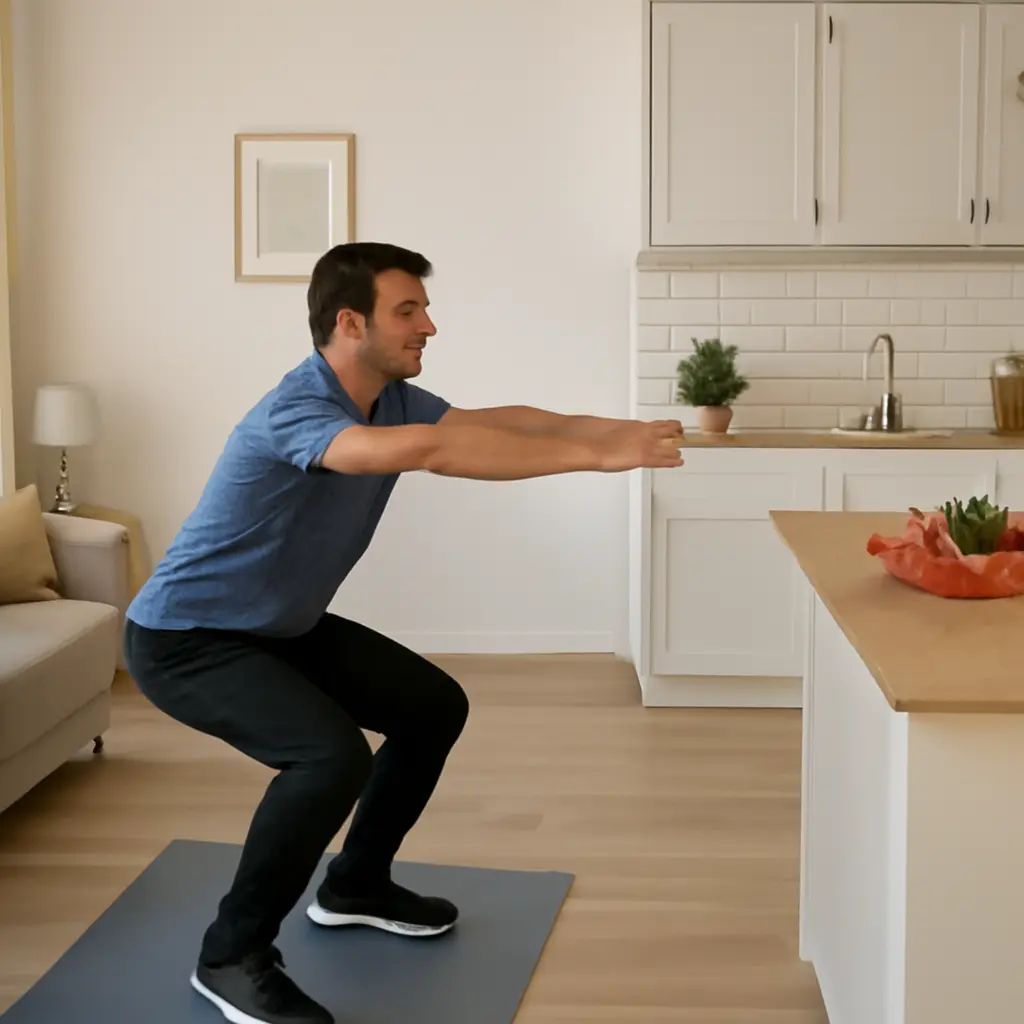
Beginners can combine home training and meal planning successfully by starting with manageable workouts, building meals around nutritious basics, and adjusting both routines to fit real schedules. Home exercise can help adults work toward the World Health Organization’s recommendation of 150 to 300 minutes of moderate-intensity aerobic activity each week, while balanced eating supports general health and recovery. The most sustainable approach is not a perfect plan: it is a repeatable one that includes strength, aerobic movement, practical meal preparation, and room to adapt.
Build a beginner home-training plan around consistency
A home-training plan is a planned set of physical activities performed at home, organized to develop fitness through appropriate frequency, effort, and progression. The World Health Organization recommends that adults accumulate at least 150 minutes of moderate-intensity aerobic activity weekly, or an equivalent amount of vigorous activity, and do muscle-strengthening activities involving major muscle groups on two or more days per week. These are general public-health targets, not a requirement to reach immediately or a personalized prescription.
For a beginner, the useful categories—or hyponyms—of home training include body-weight strength exercise, aerobic activity, mobility work, and short movement breaks. They can be combined without specialized equipment. Begin below your maximum capacity, prioritize comfortable technique, and increase duration or difficulty gradually. If you have a chronic condition, an injury, or concerns about starting exercise, ask a qualified health professional for guidance.
Body-weight strength training
Strength training is exercise that challenges muscles against resistance; at home, resistance may come from body weight, resistance bands, or household items used safely. A simple session might include chair squats, wall or counter push-ups, hip hinges, glute bridges, and supported rows with a band. Start with one or two sets of movements you can perform with control, resting as needed. The U.S. Centers for Disease Control and Prevention (CDC) includes muscle-strengthening activity in its adult physical-activity guidance and advises working all major muscle groups.
Aerobic movement and mobility
Aerobic exercise raises breathing and heart rate over time; examples at home include brisk marching, dancing, stair walking, and low-impact follow-along routines. Moderate intensity generally means you can talk but not sing comfortably. Mobility work uses controlled movements to support comfortable range of motion, while brief movement breaks interrupt long periods of sitting. These activities can complement strength sessions, but mobility alone does not replace aerobic or muscle-strengthening exercise.
A realistic weekly schedule
A beginner schedule should fit available time and allow recovery. For example, someone might do two short full-body strength sessions, take three brisk walks or indoor dance sessions, and use gentle mobility on rest days. The activity can be divided into manageable bouts across the week; a missed session is a reason to resume the routine, not to double the next workout. Track sessions and how they feel, then add time or difficulty in small steps if recovery is good.
Pair meal planning with home-training needs
Meal planning is the practical process of deciding in advance what foods and meals to buy, prepare, and eat. For people beginning exercise, it can make nourishing choices easier and reduce last-minute reliance on whatever is available. The U.S. Department of Agriculture’s MyPlate guidance encourages variety across fruits, vegetables, grains, protein foods, and dairy or fortified alternatives. There is no single meal plan that suits everyone; needs vary with health, preferences, budget, culture, and activity.
The most helpful connected categories are balanced meal construction, protein-containing foods, hydration, and preparation habits. A meal need not be engineered around a workout to be useful. Aim for a pattern that supplies enough energy and a variety of foods, and use the exercise schedule as a planning cue rather than a reason to follow restrictive rules.
Build balanced, flexible meals
A balanced meal combines food groups to provide a mix of nutrients and energy. As a simple visual guide, MyPlate recommends making about half the plate fruits and vegetables, with the remainder divided between grains and protein foods, alongside dairy or a fortified alternative when appropriate. For example, a beginner could prepare rice, beans or chicken, and vegetables, then add fruit or yogurt according to preference. The visual is a flexible guide—not a strict rule for every meal or every person.
Include protein foods without overcomplicating meals
Protein is a nutrient used to build and maintain body tissues, including muscle. Beans, lentils, tofu, eggs, dairy foods, fish, poultry, nuts, and seeds can all contribute. The National Academies’ Dietary Reference Intakes set the adult protein Recommended Dietary Allowance at 0.8 grams per kilogram of body weight per day for generally healthy adults; individual needs can differ, and this reference is not a personalized sports-nutrition target. Including a protein food in ordinary meals is a practical starting point; supplements are not automatically necessary for beginners.
Plan hydration and workout timing sensibly
Hydration means replacing fluids in a way that supports normal body function and responds to conditions such as heat, workout duration, and sweat loss. Water is generally suitable for many short, moderate home sessions. The National Athletic Trainers’ Association emphasizes that fluid needs vary, so a fixed amount is not appropriate for everyone. For comfort, beginners can schedule a normal meal or snack around exercise according to hunger and routine; there is no need to force a special pre- or post-workout product after every session.
Make training and meal preparation work together
Once exercise and food basics are clear, the next step is coordination: choose meals and workouts that can coexist in an ordinary week. The bridge between the two is preparation. A calendar can reserve time for workouts, while a short shopping list and a few prepared ingredients make meals easier on busy days. This reduces decision-making without requiring a rigid timetable.
Use a simple weekly template
A weekly template is a repeatable outline rather than a detailed daily prescription. Choose two or three workout windows, identify a few meals that share ingredients, and keep easy options available for days when plans change. For instance, cooked grains, frozen vegetables, canned beans, eggs, and fruit can be combined into quick meals. A short walk may replace a longer planned session when time is limited, while the next scheduled strength session remains on the calendar.
Prepare ingredients, not necessarily every meal
Meal preparation can mean washing produce, cooking a batch of grains, portioning snacks, or preparing complete meals ahead of time. Beginners may find ingredient preparation more flexible than cooking a full week of identical dishes. Store food safely, refrigerate perishable items promptly, and use reliable food-safety guidance for storage times. Batch preparation can support consistency, but it should not become a burden that competes with rest or exercise.
Track habits and adjust gradually
Habit tracking records actions—such as workouts completed, meals prepared, or energy and sleep—rather than judging success only by weight or appearance. A simple calendar or checklist can show whether a plan is feasible. If workouts repeatedly get skipped, shorten them or change their timing. If meal preparation feels overwhelming, choose one ingredient to prepare in advance. Progress is more likely to last when adjustments solve practical problems instead of adding stricter rules.
Avoid common beginner pitfalls
The combination of exercise and meal planning should improve health and daily function, not create an all-or-nothing test. Common pitfalls include starting with excessive workout volume, treating food as a reward or punishment, and following an inflexible plan that ignores fatigue, finances, or preferences.
- Increase exercise gradually and include recovery days, especially when movements cause persistent pain or unusual symptoms.
- Do not assume that a harder workout requires severe food restriction or a complicated supplement routine.
- Keep convenient, nourishing foods available so a busy day does not derail the whole plan.
- Adapt meals to medical needs, allergies, cultural preferences, and budget; seek a registered dietitian or clinician for individualized advice.
A real-world example is a beginner with limited time who schedules two 20-minute strength sessions and three short brisk walks, while preparing a pot of beans and a batch of grains for flexible meals. If a workday disrupts one walk, the person can take a shorter movement break and continue the normal schedule afterward. The value lies in repeatability, not in matching a perfect plan every day.
Conclusion: Make a sustainable home-training and meal-planning routine
Successful beginner home training combines an appropriately gradual mix of strength, aerobic movement, and mobility with meal planning based on variety, practical preparation, and individual needs. Public-health guidance provides useful reference points—such as weekly aerobic activity and regular muscle strengthening—but beginners can build toward them over time. Start with a few scheduled workouts, plan a small set of uncomplicated meals, and review what worked after a week. For further guidance, consult the CDC, the World Health Organization, and USDA MyPlate, and seek professional advice when health circumstances call for personalization.
Sources: World Health Organization, WHO Guidelines on Physical Activity and Sedentary Behaviour, 2020, https://www.who.int/publications/i/item/9789240015128; U.S. Centers for Disease Control and Prevention, Physical Activity Basics, https://www.cdc.gov/physical-activity-basics/; U.S. Department of Agriculture, MyPlate, https://www.myplate.gov/; National Academies of Sciences, Engineering, and Medicine, Dietary Reference Intakes for Energy, Carbohydrate, Fiber, Fat, Fatty Acids, Cholesterol, Protein, and Amino Acids, https://nap.nationalacademies.org/catalog/10490/dietary-reference-intakes-for-energy-carbohydrate-fiber-fat-fatty-acids; Casa et al., National Athletic Trainers’ Association Position Statement: Fluid Replacement for the Physically Active, Journal of Athletic Training, 2017, https://doi.org/10.4085/1062-6050-52.2.03